Start here. Find Your Space.
The things worth considering before you fall in love with the view.
What if this was ours?
Maybe it starts with a long lunch, a walk along the beach or a slow Sunday morning with nowhere else to be. Maybe you notice yourself looking at the houses rather than simply the view.
Buying a holiday home can be an exciting idea. But before you fall in love with the perfect kitchen, the ocean outlook or that beautiful timber deck, it’s worth thinking about what you actually want the property to do.
Because a beautiful house isn’t necessarily a great holiday home.
And the right holiday home isn’t necessarily the biggest, newest or most expensive one.
It’s the one that fits the life you imagine having there.
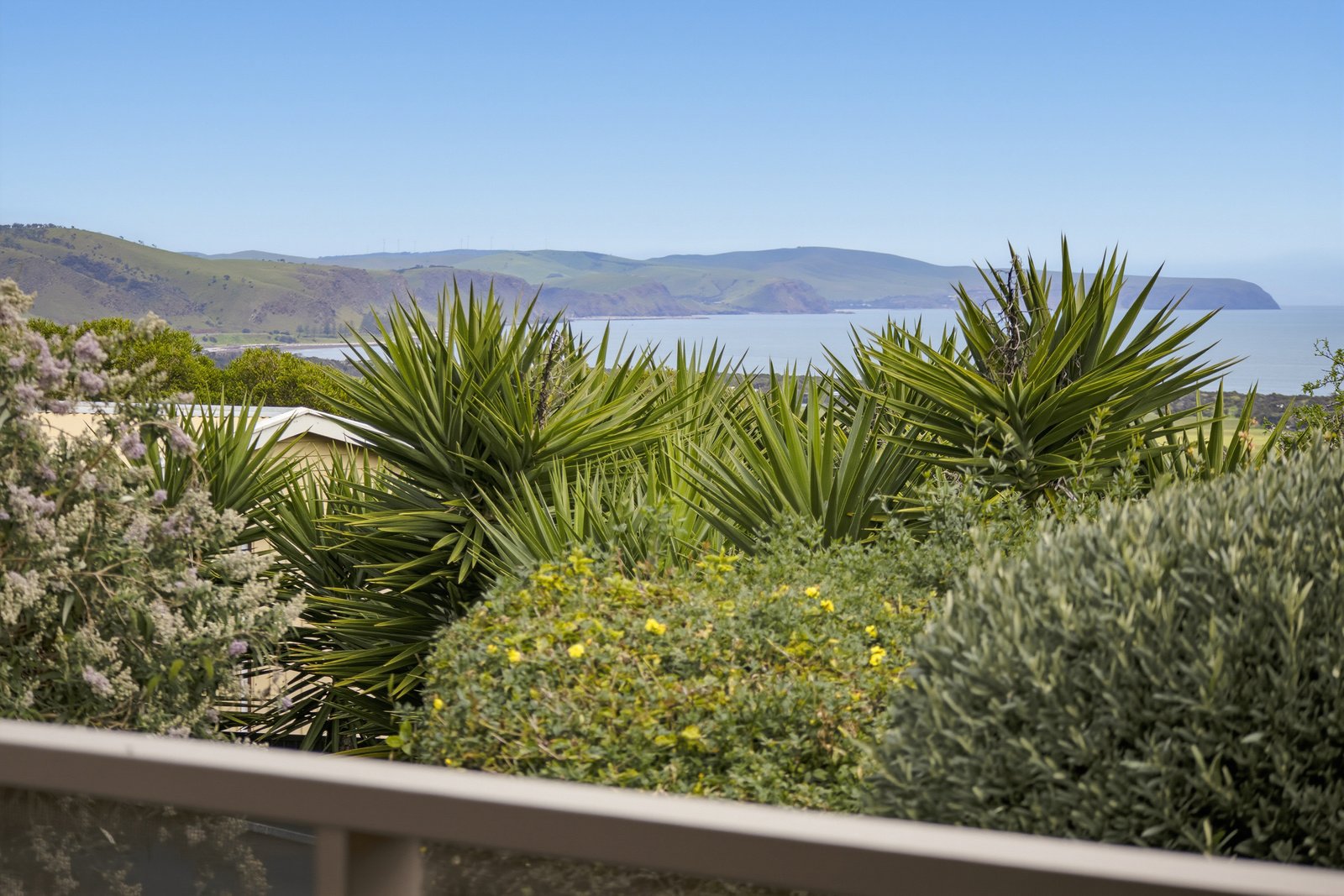
Of course, views matter.
A Normanville sunset over the water is difficult to argue with.
But when you’re choosing a holiday home, it’s worth looking beyond what you can see from the balcony.
Ask yourself what you want to be able to do when you step outside.
Do you want to walk to the beach?
Would you rather be close to cafés and shops?
Do you want somewhere quiet and private?
Is being elevated, with a sweeping view, more important than being able to walk everywhere?
For some people, the perfect holiday starts with opening the front door and seeing the ocean.
For others, it’s leaving the car parked on Friday afternoon and not touching it again until Sunday.
Location isn’t just about the address. It’s about how you want your weekends to feel.
It can be tempting to think that more bedrooms automatically mean a better holiday home.
Not necessarily.
A well-designed two-bedroom property might be exactly right for a couple or a small family. A three-bedroom home can offer flexibility without becoming unnecessarily large. Four bedrooms or more can make sense when the whole family, friends or multiple generations are likely to visit.
But bedrooms are only part of the equation. Think about how people will actually use the house.
Is there enough living space?
Can everyone sit around the dining table?
Are there enough bathrooms?
Is there somewhere for teenagers to retreat to?
Can two families comfortably stay without feeling like they’re living on top of each other?
A holiday home has a different rhythm from a normal home. People tend to gather. Meals stretch out. Someone is always making coffee. Kids move between inside and outside.
The best holiday homes give people somewhere to be together — and somewhere to escape to.
Some of the most important features of a holiday home aren’t necessarily the ones that look impressive in a property listing.
A practical kitchen.
A good dining table.
A comfortable outdoor area.
Somewhere to sit in the afternoon sun.
A lawn where children can play.
A balcony where everyone can gather at the end of the day.
A second living space where someone can read, watch a movie or simply disappear for a while.
These are the spaces that become part of the memories.
And if you’re buying somewhere for your own family, think about how you’ll use it on an ordinary weekend — not just how it looks during an open inspection.
Holiday homes have a habit of making you notice details you might overlook when buying a normal house.
Where will everyone park?
Where will the beach towels go?
Is there somewhere to store bikes, surfboards and outdoor gear?
Can you wash and dry everything easily?
Is the outdoor area genuinely usable?
Would the house work if you brought the dog?
What happens on a cold or rainy weekend?
Air conditioning and heating, storage, laundry facilities and practical outdoor spaces might not make the most exciting photographs, but they can make a significant difference to how a property actually works.
And if you’re planning to welcome guests, those details become even more important.
Living near the coast is part of the appeal of Normanville. It’s also something worth considering when you’re buying.
Salt air, weather exposure and coastal conditions can affect outdoor areas, fittings and finishes over time. Decking, roofing, windows, doors, gardens and outdoor furniture all deserve attention.
That doesn’t mean coastal property is something to be nervous about. It simply means you should understand what you’re buying and allow for ongoing maintenance.
The same applies to pools, larger gardens and other features that can make a holiday home wonderful — but also create another layer of upkeep.
And if you won’t be living nearby, think about who will take care of those things when you’re not there.
This is one of the biggest questions to consider if your holiday home is going to spend much of the year empty.
Who looks after the garden?
Who checks the property?
Who deals with maintenance?
Who cleans it between stays?
What happens if the air conditioner stops working on a Saturday?
How will you manage linen, repairs and unexpected issues?
You don’t necessarily need to have every answer before buying. But you should understand that owning a holiday home isn’t quite the same as owning a house that you live in every day.
The less often you’re there, the more important the systems around the property become.
For some owners, letting the property to guests when they’re not using it is part of the appeal. If that’s part of your thinking, it’s worth considering it before you buy rather than afterwards.
A property that is perfect for your family isn’t automatically a property that will work well for guests. Think about the things visitors are likely to value:
Comfortable sleeping arrangements
Bathrooms that work for the number of guests
Practical parking
Outdoor living
Heating and cooling
A good kitchen
Wi-Fi
Storage
Easy access
Proximity to the things people come to Normanville for
And then there’s the less glamorous side — cleaning, maintenance, linen, guest communication, furnishing and the periods when the property isn’t occupied.
Don’t buy a property solely because you think someone else will want to rent it. Buy a property you’d be happy to own first.
Then work out whether it can work as a holiday home for other people too.
There’s another trap worth avoiding. It’s easy to stand in a house and imagine all the people who might stay there.
Families will love this.
People will pay extra for that.
We could sleep ten.
But you’re buying the property. So ask a more personal question:
Would we actually want to stay here?
Would you look forward to coming down for a wet winter weekend?
Would the kids still want to come when they’re teenagers?
Would you enjoy cooking here?
Would you sit outside at the end of the day?
Would you still love the house once the excitement of buying it has worn off?
A holiday home should work for the people who own it, not just the people who might stay in it.
There is, inevitably, a practical side to all of this. Before buying, make sure you understand the full cost of ownership — not just the purchase price. That can include:
Purchase and transaction costs
Loan costs and interest
Council rates
Insurance
Utilities
Maintenance
Gardening
Cleaning
Linen
Pool maintenance
Furnishing and replacement costs
Property management
Periods when the property is vacant
If you’re planning to holiday-let the property, treat potential rental income carefully. Occupancy can vary. Costs can change. Markets move.
The numbers should make sense for you without relying entirely on a best-case scenario.
Professional financial, legal, tax and property advice can help you understand the implications for your own circumstances.
Perhaps it’s not the house with the biggest floor plan. Perhaps it’s not the one with the most bedrooms. And perhaps it’s not even the one with the best view.
A good holiday home is one that makes the life you want to live there feel easy.
Somewhere you can arrive on Friday afternoon and immediately relax. Somewhere the kids know where everything is. Somewhere friends can stay without everyone feeling crowded. Somewhere you can cook, eat, swim, walk, read, talk and do very little at all. Somewhere that works when the sun is shining — and still feels good when it isn’t.
Because ultimately, you aren’t just buying a property. You’re buying the possibility of more time here.
More Friday afternoons.
More long lunches.
More walks without checking the time.
More mornings where nobody needs to be anywhere.
And perhaps, eventually, a place that feels a little less like somewhere you visit…
…and a little more like home.
Before you start looking if Normanville is somewhere you’re thinking about owning, take your time.
Stay for a few different seasons. Explore beyond the obvious.
Walk the streets.
Have a coffee.
Talk to locals.
Notice which parts of town you naturally gravitate towards.
And most importantly, think about the life you want the property to hold.
The right holiday home isn’t necessarily the one that looks best on paper. It’s the one that feels right when you imagine being there.
Find Your Space.
From quiet beaches and clifftop walks to local cafés, hidden gems and unforgettable sunsets, discover the places, flavours and simple moments that make Normanville worth coming back to.